
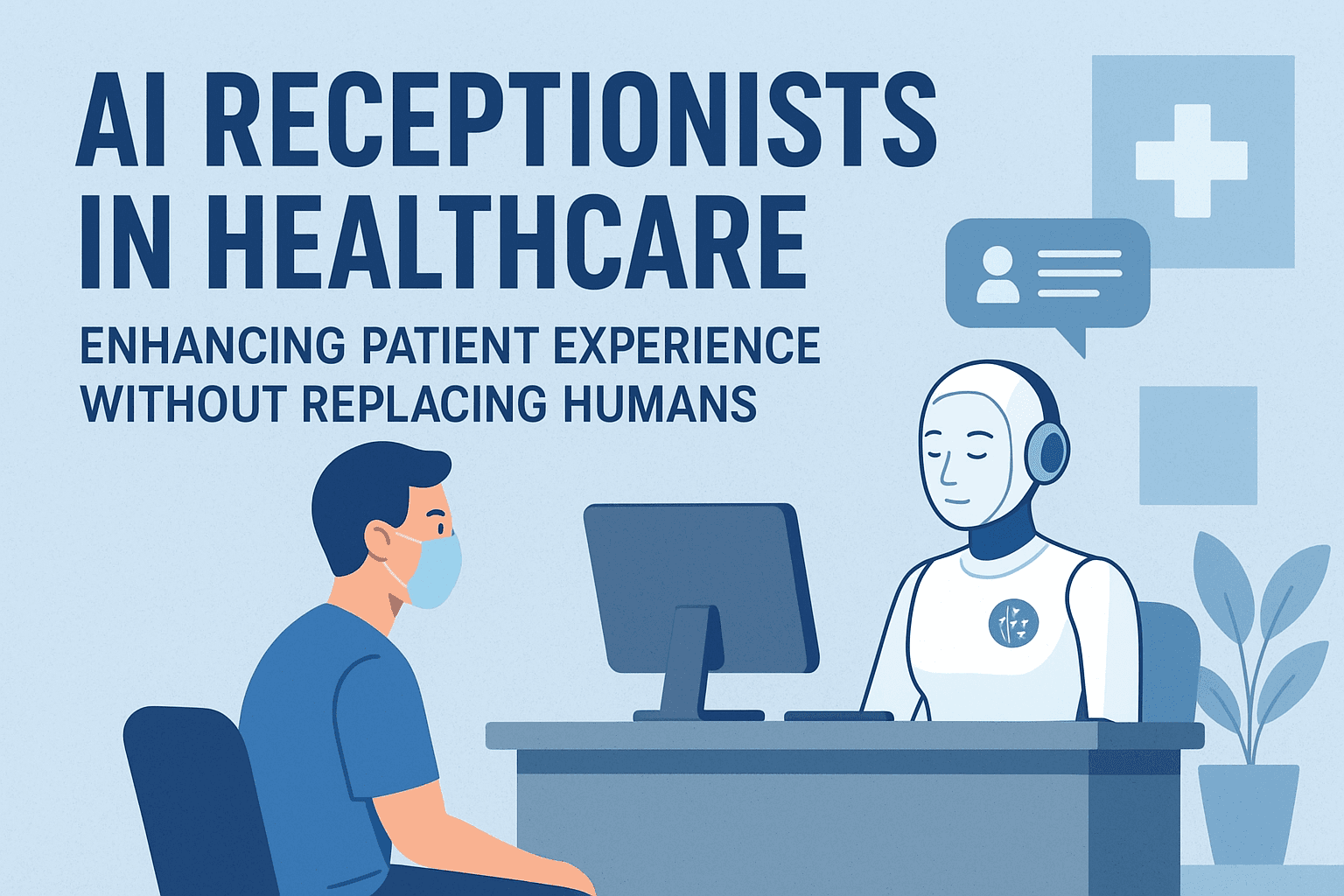
AI Receptionists in Healthcare: Enhancing Patient Experience Without Replacing Humans
It’s 8:30 PM.
A worried father dials his local hospital’s number—his child has developed a sudden fever. He’s bracing himself for the usual: long hold times, unanswered calls, or being told to “call back in the morning.”
But this time, the call is answered immediately.
A polite voice asks about the patient’s condition, checks doctor availability, and schedules an appointment for the next morning. The father hangs up relieved—help is on the way.
Here’s the twist: the voice wasn’t a human. It was ROVA—an AI-powered receptionist.
Breaking the Myth: AI Will Replace Humans
Whenever AI enters the healthcare conversation, one question dominates:
“Will AI replace real hospital staff?”
The answer is no.
AI receptionists are not here to eliminate jobs; they’re here to fill gaps that currently leave patients frustrated and hospitals overwhelmed.
Think of AI receptionists as the first line of support—handling after-hours calls, repetitive queries, and appointment bookings—so that human staff can focus on what they do best: empathetic, complex, patient-centered care.
Where AI Receptionists Shine
- 24/7 Availability: Patients don’t wait until “office hours” to get urgent answers.
- Zero Hold Time: No more endless ringing or busy lines.
- Multilingual Support: Patients feel understood in their own language.
- Consistency: No mood swings, no fatigue—just reliable responses.
For hospitals, this means fewer missed appointments, higher patient satisfaction, and smoother workflows. For patients, it means trust, accessibility, and comfort.
Humans + AI: A Powerful Partnership
Imagine this:
- At 2 AM, ROVA answers a call, books an appointment, and notes down symptoms.
- By 9 AM, when the patient arrives, the human receptionist greets them warmly, already briefed with the details.
Instead of spending time on repetitive tasks, staff can connect more deeply with patients. The result? A hybrid model where AI handles efficiency, and humans handle empathy.
The Future of Patient Experience
Healthcare isn’t just about treatment—it’s about experience. Patients today expect instant responses, personalized engagement, and seamless communication. AI receptionists like ROVA aren’t just meeting those expectations; they’re setting new benchmarks.
The hospitals that embrace this partnership—AI + human staff—will emerge as patient-first institutions. Those that resist may risk falling behind.
Final Thought
When that worried father hung up the phone, he didn’t care whether the voice was human or AI. What mattered was his child was cared for.
That’s the future of healthcare reception: compassion powered by technology.
Want to see how ROVA can transform patient experience at your hospital? Let’s connect for a live demo. Fill the form.
Recommended Articles
More articles from Artificial Intelligence

Shadow AI in the Corporate World
Shadow AI employees using unsanctioned AI tools without IT or compliance knowledge — is already inside most organisations. Driven not by malice but by productivity, it exposes sensitive data, creates hallucination risks in high-stakes decisions, and puts companies in breach of regulations like HIPAA. A blanket ban won't work. The answer is governed AI infrastructure paired with clear communication about why the guardrails exist.

The 7 PM Drop-Off: Why Most Clinics Lose Patients After Working Hours
Most clinics don’t lose patients because of poor treatment- they lose them because nobody responded in time. From missed calls after OPD hours to delayed follow-ups and unanswered inquiries, silent communication gaps are becoming one of healthcare’s biggest revenue leaks. This blog explores why modern patients expect instant conversations, how slow response systems hurt trust and conversions, and why AI-powered patient engagement is becoming the real competitive advantage for hospitals in 2026.
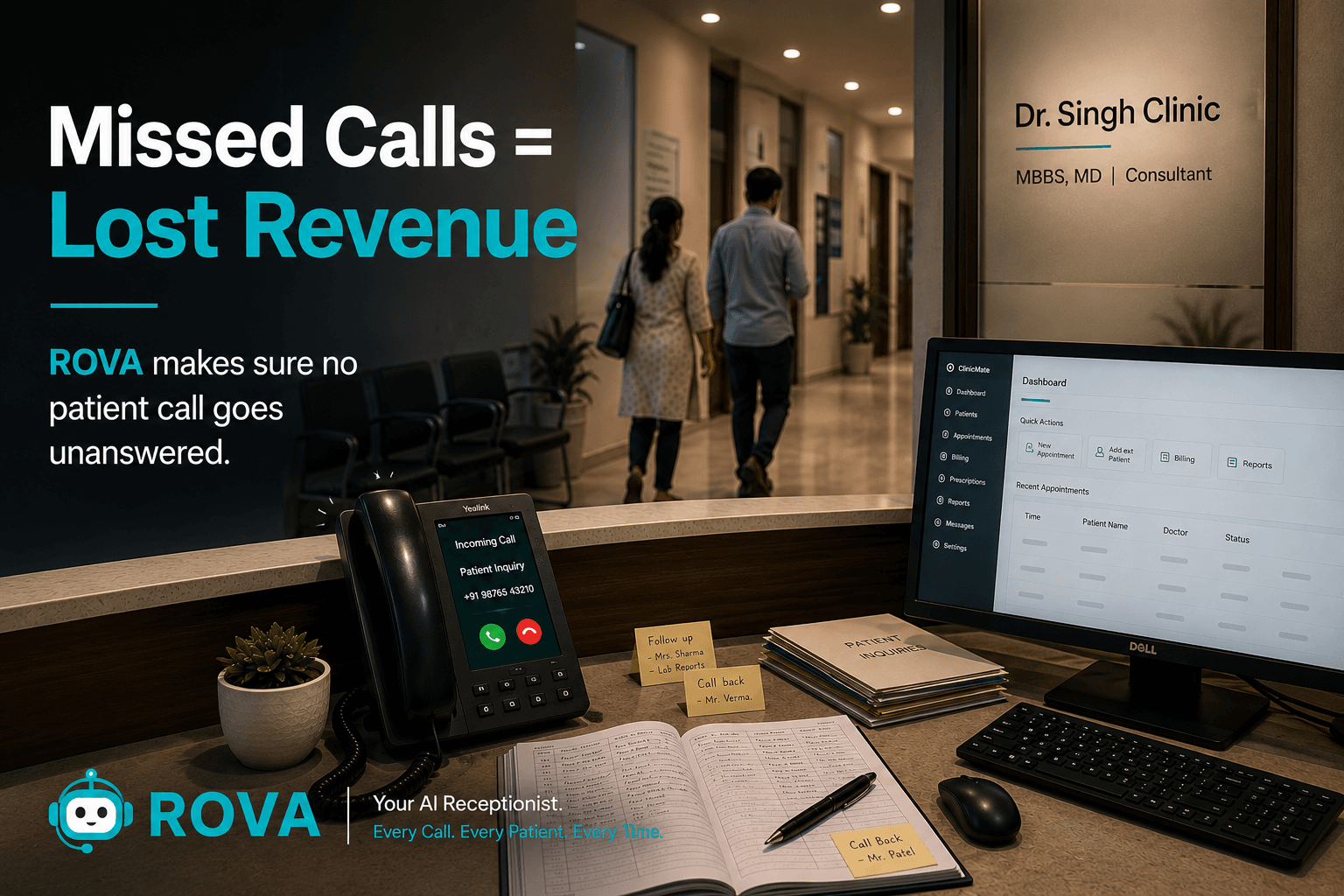
Missed Calls = Loss Revenue
Missed calls in healthcare aren't just a front desk inconvenience - they're a direct, measurable revenue leak. This blog breaks down exactly how clinics and hospitals across India are losing lakhs every month through unanswered calls, delayed follow-ups, and the appointment register that never gets actioned. Written for clinic owners and hospital administrators who want to understand the real cost of response time - and what the smartest healthcare setups are doing to fix it without hiring more staff.
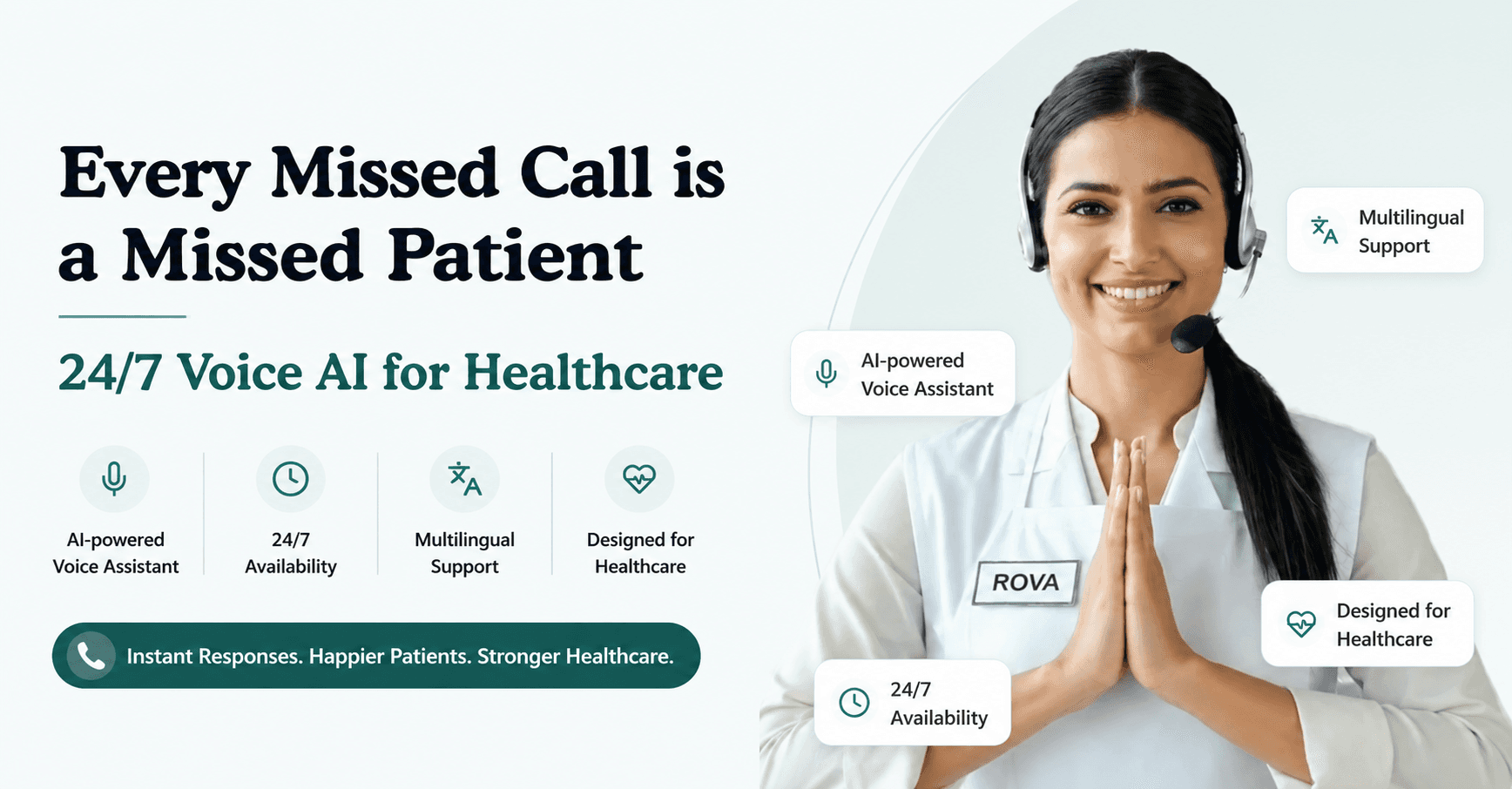
Why Modern Hospitals Need AI Receptionists More Than Bigger Marketing Budgets
Hospitals spend lakhs attracting patients, but most losses happen after the lead arrives. Calls go unanswered. Follow-ups get delayed. Front desks get overwhelmed. This story-driven blog follows a busy OPD day where the real problem wasn’t patient demand — it was communication chaos. The article introduces how AI reception systems are transforming patient response time, reducing operational burden, and improving trust.