
Reducing Operational Bottlenecks in Hospitals: A Practical Guide
Introduction
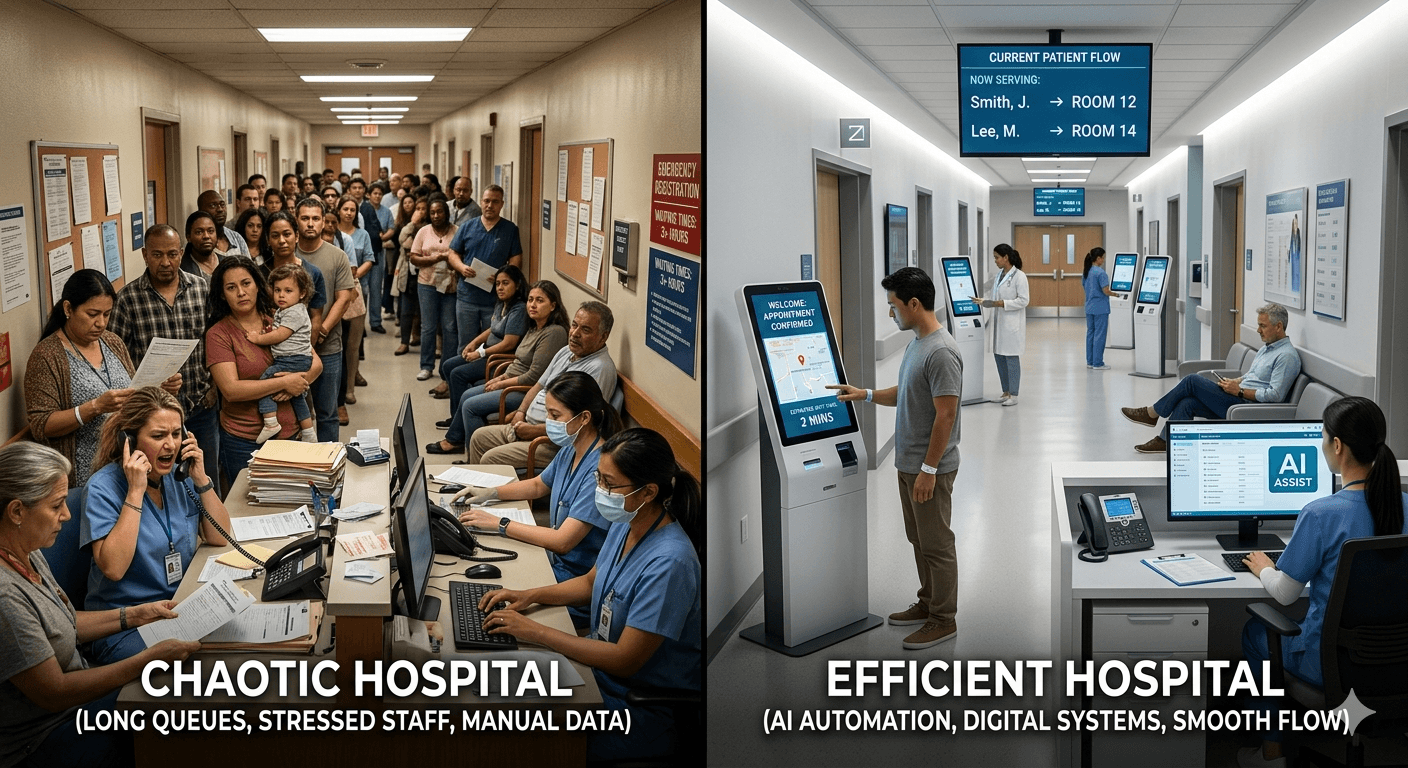
It’s 10:30 AM at a busy hospital.
The waiting area is full. Phones are ringing continuously. A patient is waiting for confirmation. Another is trying to reschedule. Meanwhile, the front desk is juggling calls, appointments, and walk-ins—all at once.
This isn’t a one-off scenario. It’s the everyday reality for many hospitals.
Operational bottlenecks don’t just slow down processes—they impact patient experience, staff efficiency, and overall hospital performance.
So, how can hospitals move from chaos to clarity? Let’s break it down.
What Are Operational Bottlenecks in Hospitals?
Operational bottlenecks occur when a specific part of the system slows down the entire workflow.
In hospitals, this typically shows up as:
- Long waiting times
- Missed or delayed appointments
- Overloaded call centers
- Lack of coordination between departments
- Manual processes causing inefficiencies
These bottlenecks don’t just affect operations—they shape how patients perceive your care.
The Real Impact of Bottlenecks
Imagine a patient calling to book an appointment but facing long wait times.
Chances are, they might:
- Hang up
- Delay treatment
- Choose another provider
Similarly, when staff spend hours managing repetitive tasks like confirmations and follow-ups, it reduces their ability to focus on what truly matters—patient care.
Identifying Key Bottlenecks
Before solving, it’s important to identify where the friction lies:
1. 📞 Call Management Overload
High call volumes with limited staff lead to delays and missed interactions.
2. 📅 Appointment Scheduling Gaps
Manual scheduling often leads to overlaps, missed confirmations, and confusion.
3. 🔁 Lack of Follow-Ups
Patients often don’t receive timely reminders or post-consultation engagement.
4. 📊 No Centralized Data
Without a CRM or system, tracking patient journeys becomes difficult.
Practical Ways to Reduce Operational Bottlenecks
🔹 1. Automate Routine Interactions
Automating tasks like appointment booking, confirmations, and reminders can significantly reduce manual workload.
🔹 2. Implement Smart Call Handling
Using AI-powered systems to manage inbound and outbound calls ensures no patient is missed—even during peak hours.
🔹 3. Streamline Appointment Workflows
Digital scheduling systems can reduce errors, improve coordination, and enhance patient convenience.
🔹 4. Enable Continuous Patient Engagement
From reminders to follow-ups, maintaining consistent communication builds trust and improves outcomes.
🔹 5. Leverage Data & Analytics
A centralized dashboard helps track performance, identify gaps, and make informed decisions.
The Role of Technology in Modern Hospitals
Today’s leading hospitals are moving towards:
- AI-powered communication systems
- Automated patient engagement platforms
- Data-driven decision making
These aren’t just upgrades—they are becoming essential for scalable healthcare delivery.
A Shift Towards Patient-Centric Operations
Reducing bottlenecks isn’t just about efficiency—it’s about experience.
When systems are smooth:
- Patients get faster responses
- Staff feel less overwhelmed
- Hospitals operate more predictably
This creates a ripple effect of better care, stronger trust, and sustainable growth.
✅ Conclusion
Operational bottlenecks are not inevitable—they are solvable.
By identifying key gaps and adopting smarter systems, hospitals can transform their workflows and deliver a seamless patient experience.
The question is no longer whether to optimize—but how soon you’re ready to take that step.
Published on 1 month ago
Recommended Articles
More articles from Artificial Intelligence

The 7 PM Drop-Off: Why Most Clinics Lose Patients After Working Hours
Most clinics don’t lose patients because of poor treatment- they lose them because nobody responded in time. From missed calls after OPD hours to delayed follow-ups and unanswered inquiries, silent communication gaps are becoming one of healthcare’s biggest revenue leaks. This blog explores why modern patients expect instant conversations, how slow response systems hurt trust and conversions, and why AI-powered patient engagement is becoming the real competitive advantage for hospitals in 2026.
Missed Calls = Loss Revenue
Missed calls in healthcare aren't just a front desk inconvenience - they're a direct, measurable revenue leak. This blog breaks down exactly how clinics and hospitals across India are losing lakhs every month through unanswered calls, delayed follow-ups, and the appointment register that never gets actioned. Written for clinic owners and hospital administrators who want to understand the real cost of response time - and what the smartest healthcare setups are doing to fix it without hiring more staff.
Why Modern Hospitals Need AI Receptionists More Than Bigger Marketing Budgets
Hospitals spend lakhs attracting patients, but most losses happen after the lead arrives. Calls go unanswered. Follow-ups get delayed. Front desks get overwhelmed. This story-driven blog follows a busy OPD day where the real problem wasn’t patient demand — it was communication chaos. The article introduces how AI reception systems are transforming patient response time, reducing operational burden, and improving trust.

Voice AI for Citizen Engagement: Transforming Public Service Delivery
Voice AI is transforming citizen engagement by enabling instant, multilingual, and human-like interactions at scale. From proactive outreach and grievance follow-ups to feedback collection and service navigation, Voice AI helps public systems improve accessibility, efficiency, and responsiveness. With solutions like RxOne’s ROVA, organizations can automate communication while generating actionable insights that enhance public service delivery and citizen experience.